How to Get Dark Mehndi: Aftercare Tips From a Bridal Artist
Every bride wants a deep, rich mehndi stain on her wedding day. After more than 20 years of applying bridal mehndi in Ilford, I can tell you the colour depends on three things: the quality of the henna, your skin, and what you do in the 48 hours after application. The first one is my job. The other two are where these tips come in.
Before your mehndi
- Start with clean, dry skin. Wash your hands and feet with soap and dry them well. Avoid creams, oils and lotions on the day, because they create a barrier the henna can’t get through.
- Do any waxing or threading first. Hair removal and scrubs straight after mehndi will lift the colour, so book them a day or two before.
- Stay warm. Henna stains better on warm skin. If your hands are cold, run them under warm water and dry them before we start.
While the paste is on
- Keep it on as long as you can. Overnight is ideal. If that isn’t possible, aim for at least 4–6 hours. The longer it stays, the darker it goes.
- Seal it with sugar water. Once the paste has dried, I dab on a little sugar and water (equal parts) with cotton wool. This helps it stick to the skin and stops it cracking and falling off early.
- Wrap up for bed. A loose layer of tissue and medical tape, or thin cotton gloves and socks, keeps the paste in place overnight.
Taking it off
- Scrape, don’t wash. Gently scrape the dried paste off with the back of a butter knife or your fingernail.
- Rub in a little oil. Coconut or olive oil on the area helps the remaining flakes come away and protects the stain.
- Keep water away for 12–24 hours. This is the most important step. The stain starts orange and darkens to a rich brown or maroon over the next 24–48 hours, and water early on stops that process.
The days after
- Warmth helps the colour develop. Some brides gently steam their hands over a pan of water with a few cloves, at a safe distance.
- Avoid chlorine, harsh soaps and hand sanitiser on the design for the first couple of days.
- Moisturise once the colour has developed. Hydrated skin keeps the design looking fresh for longer.
Why some areas are darker than others
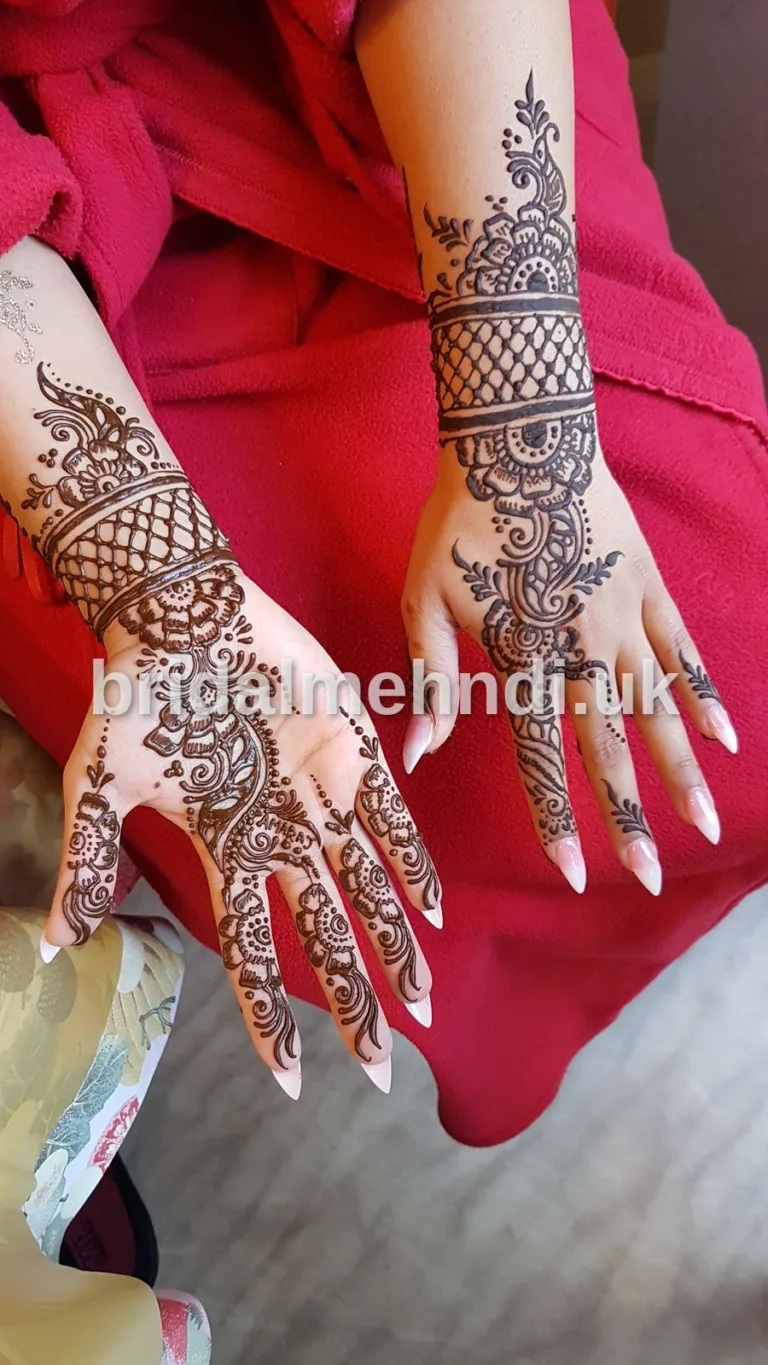
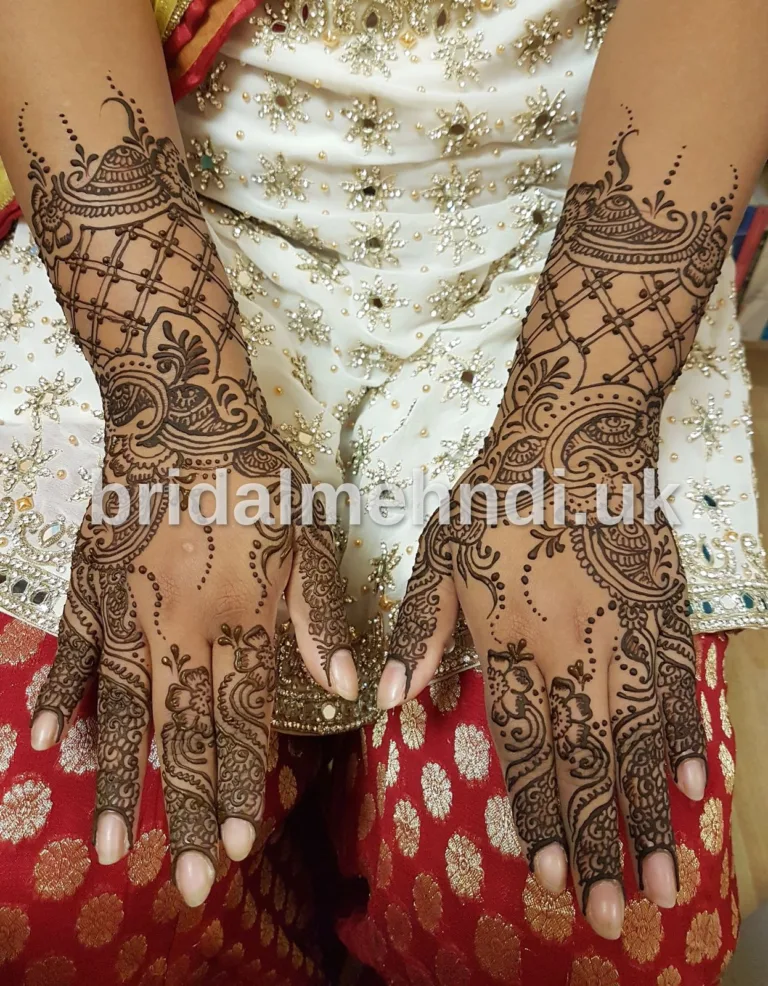
Palms, fingertips and the soles of the feet always stain darkest, because the skin there is thicker. The backs of the hands go a little lighter, and the arms lighter still. That’s completely normal, and it’s why I plan bridal designs with the densest detail where it will show best.
A word about “black henna”
Natural henna never stains black. Products sold as black or “instant” henna often contain chemicals such as PPD that can cause serious skin reactions. I only use natural henna, and I recommend every bride does the same.
Want to see how dark it goes on you?
Every bride can book a free bridal mehndi trial at my studio in Ilford, so you can see the colour on your own skin before the wedding. Call or WhatsApp 0789 604 8747.
You might also like
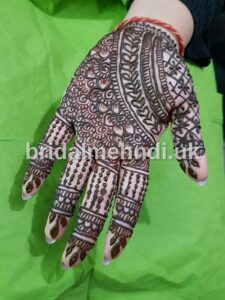

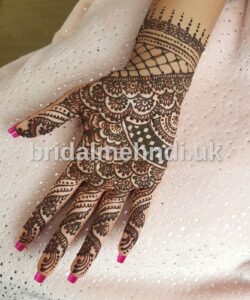

About Zakia – 20+ years of bridal mehndi in Ilford
Zakia has been creating bridal and party mehndi in Ilford and across East London for over 20 years. She uses natural henna only and offers every bride a free trial at her studio. See bridal mehndi packages or call or WhatsApp 07896 048747.